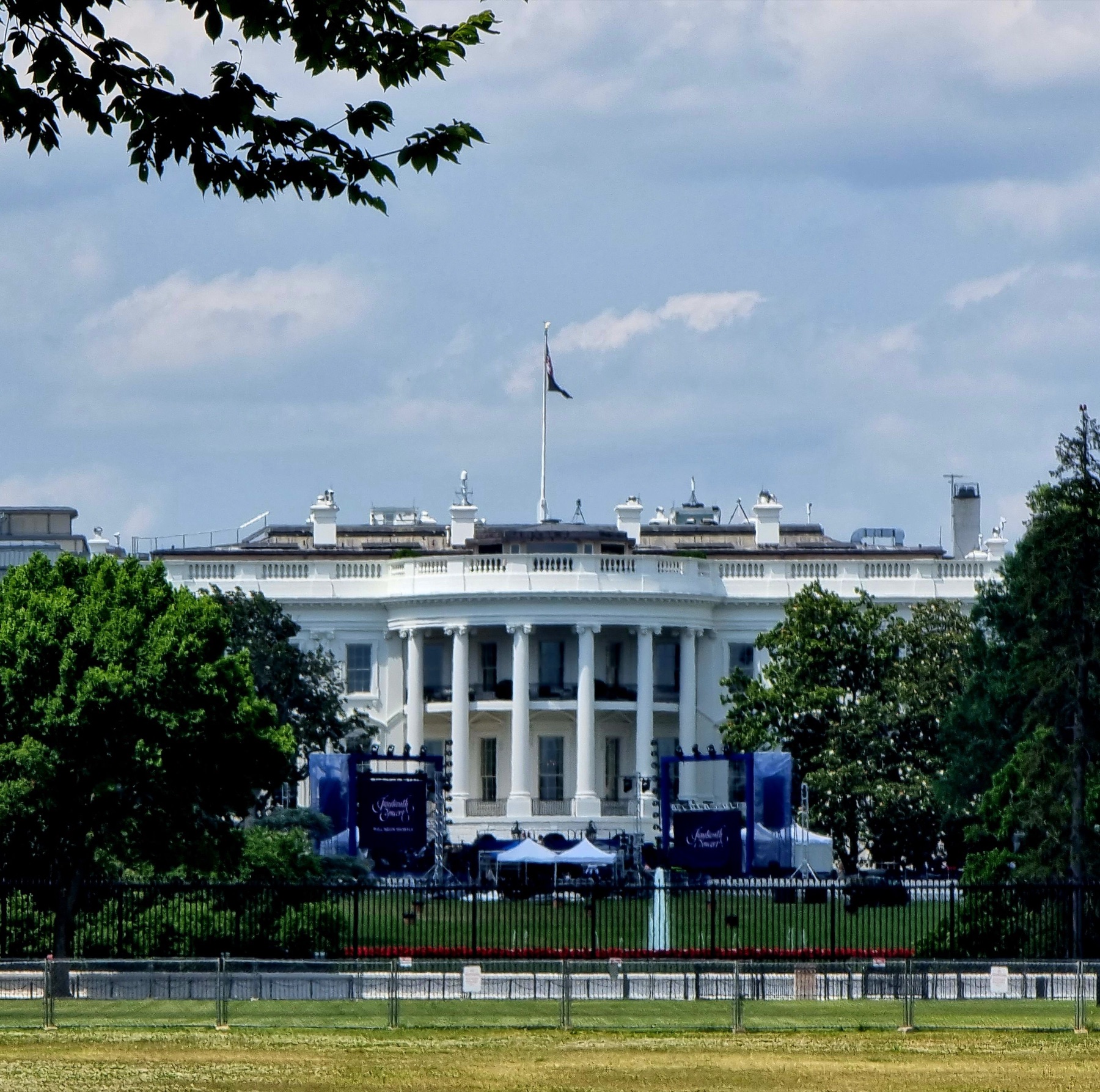
Photo: Ivan Dražić / Pexels · Free to use under the Pexels licence
On 29 September 2026, President Donald Trump signed an executive order directing US executive-branch agencies to use “Super Intelligence” (SI) instead of “Artificial Intelligence” (AI) in specified official materials. Here is what the order says, what it does not do, and what businesses should watch next.

President Donald Trump signed an executive order on 29 September 2026 directing US executive departments and agencies to use “Super Intelligence” and “SI” in place of “Artificial Intelligence” and “AI” in official correspondence, public communications, websites, reports, policy documents and other non-statutory documents, to the maximum extent permitted by law.
The immediate change is therefore a change to US executive-branch terminology, not a worldwide renaming of the technology. The White House order says the existing statutory concept of artificial intelligence is the starting point for implementation. Read the White House executive order.
There is an important distinction between the policy term used by the executive order and the way “superintelligence” is commonly used in AI research.
For the order’s initial implementation, “Super Intelligence” and “SI” are tied to technologies and systems encompassed by the statutory definition of artificial intelligence under 15 U.S.C. § 9401(3), except where another legal provision applies. The order also directs the preparation of proposed legislative language for a federal definition within 60 days.
In technical AI research, superintelligence is generally a narrower concept referring to systems whose cognitive capabilities substantially exceed those of humans across important domains. The executive-order terminology should therefore not automatically be treated as a new technical definition of the research term.
The near-term effect is therefore primarily administrative, communications and policy-language related, while the future legal definition remains a policy-development step.
The order does not itself rename AI for private businesses, foreign governments, universities or the public. It is an executive-branch instruction and operates subject to existing law.
It does not create a global technical standard called SI. Organisations outside the US government can continue to use “artificial intelligence” and “AI”, and technical researchers can retain established terminology where precision requires it.
For most businesses, the practical question is not whether company websites should suddenly replace every occurrence of “AI” with “SI”. This US executive order does not require that.
The more relevant issue is policy and procurement language. US federal agencies may begin changing terminology in guidance, forms, websites, contracting materials and programme documentation. Companies selling into the US public sector may therefore encounter both terms in parallel for some time.
For organisations operating internationally, the episode is also a useful reminder that AI governance vocabulary can become jurisdiction-specific. The same underlying technology may be described differently across policy, procurement, legal and technical contexts.
The terminology order arrived alongside other AI-policy developments at the White House. Reuters reported that leading technology executives had also signed a voluntary AI accord covering internal controls, external review and oversight principles. Reuters: Trump releases AI accord with tech executives.
The Independent’s contemporaneous report focused on Trump’s announcement and comments around public confidence in the technology. The Independent: Trump renames AI to “super intelligence”.
These developments should be kept distinct: the first is an executive-branch terminology directive and the second is a voluntary industry commitment. They form part of the same policy moment, but they have different legal and operational characteristics.
The most important near-term milestone is the proposed federal definition work. The order sets a 60-day window for proposed legislative language, including consideration of whether the existing statutory definition should be modified, expanded or otherwise superseded, together with possible conforming amendments.
Businesses should also watch how federal agencies update public-facing materials, procurement language, guidance and AI governance terminology as implementation begins.
For the US executive branch, the order directs agencies to use “Super Intelligence” and “SI” in place of “Artificial Intelligence” and “AI” in specified official and public-facing materials. It does not rename the technology worldwide.
Not under the initial terms of the order. It uses the existing statutory definition of artificial intelligence as the starting point, while separately ordering work towards a possible future federal definition.
Not necessarily. In research, superintelligence is generally a narrower concept referring to systems that greatly exceed human cognitive capabilities. The executive order is initially using the term more broadly for systems already captured by the statutory AI definition.
No. The directive is aimed at US executive departments and agencies and their specified official materials. It does not itself rename AI for UK businesses or other private organisations.
There is no requirement in this US executive order for UK companies to do so. UK businesses should continue using terminology that is accurate for customers, regulators, contracts and technical context.
The primary source is the White House executive order. This page also links to current reporting from Reuters and The Independent.
Salyant perspective
For organisations building or governing AI systems, terminology matters most when it changes the underlying requirement. The operational priorities remain familiar: understand the workflow, define acceptable system behaviour, secure integrations, maintain appropriate human oversight and measure outcomes.
See Salyant’s SEO/AEO/GEO Growth Engine